Introduction
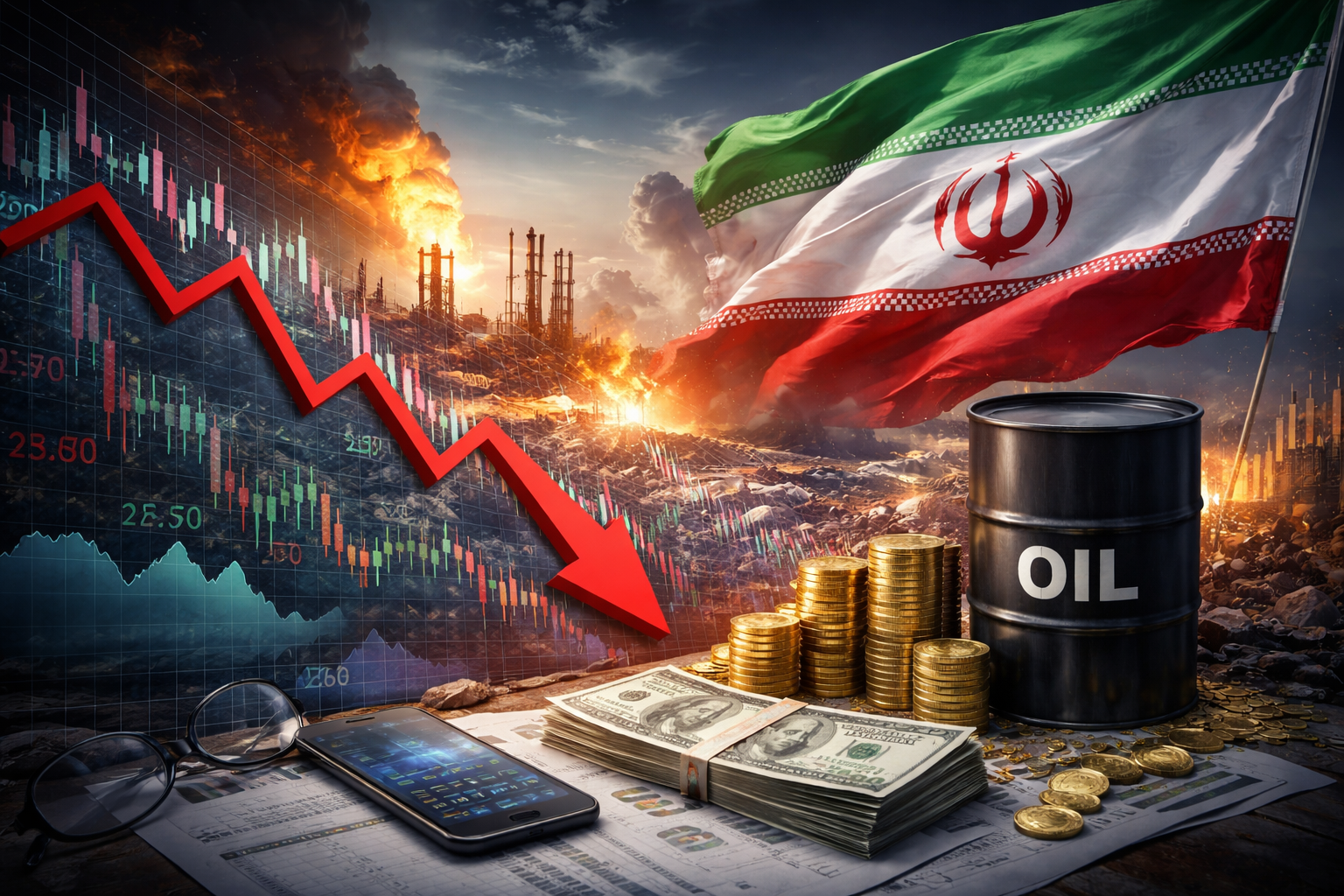
The global financial markets have entered a renewed phase of uncertainty as investors brace for heightened volatility following fresh geopolitical developments involving Iran. After a period of strong recovery and record-setting rallies, markets are once again being driven by fast-moving global events rather than stable economic fundamentals alone. This shift highlights a fragile balance between optimism fueled by corporate earnings and the risks posed by geopolitical instability. The latest developments over the weekend have triggered sharp reactions across equities, commodities, and digital assets, reinforcing the idea that modern markets are increasingly sensitive to real-time global dynamics.
Market Rally Meets Sudden Reality Check
In recent weeks, global equity markets, particularly in the United States, had experienced a powerful surge. Major indices such as the S and P 500 and Nasdaq climbed to record highs, driven by strong earnings expectations, resilient economic data, and optimism surrounding technological innovation. Investors had begun to regain confidence, believing that the worst of earlier market uncertainties had passed.
However, this optimism proved fragile. Renewed tensions surrounding Iran abruptly shifted the market narrative. Futures for major indices declined, signaling a cautious start to the trading week. This sudden reversal illustrates how quickly sentiment can change when geopolitical risks re-emerge.
The recent market behavior reflects a broader pattern. Rallies built on optimism can be rapidly undermined by uncertainty. The earlier upward momentum was partly dependent on assumptions of geopolitical stability. Once those assumptions were challenged, markets reacted almost instantly, showing how sensitive they have become to external shocks.
Oil Prices Surge As Geopolitical Risk Intensifies
One of the most immediate impacts of the renewed tensions has been the sharp rise in oil prices. Crude oil surged significantly as fears of supply disruptions returned to the forefront. The core concern revolves around the Strait of Hormuz, one of the most strategically important chokepoints in the global energy system.
Any disruption in this region has far-reaching consequences. A significant portion of the world’s oil supply passes through this narrow waterway, making it highly sensitive to geopolitical conflict. Reports of tensions and potential disruptions have led traders to price in risk premiums, pushing oil prices higher.
The implications extend beyond energy markets. Rising oil prices can fuel inflation, increase transportation and manufacturing costs, and reduce consumer purchasing power. This creates a chain reaction across the global economy, influencing corporate profits, central bank policies, and overall market sentiment.
Stocks Crypto And Bonds React To Uncertainty
The effects of geopolitical developments have spread across multiple asset classes. Equity markets declined as investors reacted to the uncertainty, while cryptocurrencies also experienced volatility. Digital assets, often viewed as alternative investments, showed that they are not immune to global risk sentiment.
Bond markets responded as well, with yields fluctuating as investors reassessed risk and future interest rate expectations. In times of uncertainty, bonds can serve as a safe haven, but their behavior depends on inflation outlook and central bank responses.
This broad reaction across asset classes highlights the interconnected nature of modern financial markets. A single geopolitical event can trigger adjustments in equities, commodities, currencies, and digital assets simultaneously.
The Return Of Headline Driven Markets
A key feature of the current market environment is the return of headline-driven trading. Investors are reacting rapidly to news updates, often prioritizing short-term developments over long-term fundamentals. This creates an environment of frequent price swings and heightened uncertainty.
In such conditions, market sentiment can shift multiple times within a single trading session. Positive developments, such as diplomatic progress, can trigger rallies, while negative news can lead to immediate selloffs. This dynamic creates a feedback loop where headlines influence markets and market reactions amplify the importance of those headlines.
The speed of information in the digital era has intensified this phenomenon. News spreads instantly, and trading algorithms respond in real time, increasing volatility and reducing the predictability of market movements.
The Broader Economic Impact Of The Iran Conflict
Beyond immediate market reactions, the ongoing situation involving Iran has broader implications for the global economy. Disruptions in energy supply and increased geopolitical uncertainty can slow economic growth and elevate inflation risks worldwide.
Higher energy costs affect both developed and emerging economies, increasing production expenses and reducing consumer demand. This can lead to slower economic expansion and greater financial strain on businesses and households.
The situation has also exposed weaknesses in traditional investment strategies. Portfolios that rely on a balance between stocks and bonds have faced challenges as both asset classes experience volatility simultaneously. This underscores the need for diversification and adaptive investment approaches in today’s complex financial landscape.
Earnings Season: A Counterbalance To Geopolitical Risk
While geopolitical tensions dominate headlines, corporate earnings remain a critical factor influencing market direction. The current earnings season includes reports from major companies across technology, industrial, and consumer sectors.
Strong earnings results could provide stability and support for markets, offsetting some of the негативе sentiment caused by geopolitical risks. On the other hand, disappointing results could amplify volatility and lead to sharper declines.
This creates a dual dynamic where markets are influenced by both macroeconomic events and corporate performance. Investors must weigh these factors carefully when making decisions.
Volatility Indicators Signal Rising Caution
Market volatility indicators have begun to rise, reflecting increased investor concern. These indicators measure expectations of future market fluctuations and are often used as a gauge of fear or uncertainty.
An increase in volatility does not necessarily indicate panic but rather a shift toward caution. Investors are adjusting their strategies, using hedging techniques and diversified portfolios to manage risk.
The rise in volatility highlights a broader trend of increased sensitivity to uncertainty. Markets are reacting more quickly and more strongly to new information, making risk management more important than ever.
The Role Of Policy And Central Banks
Monetary policy remains a crucial factor in shaping market trends. The possibility of interest rate cuts has been a major driver of recent market optimism. However, rising oil prices and inflation concerns could complicate this outlook.
If inflation remains elevated due to higher energy costs, central banks may delay or reconsider rate cuts. This could place additional pressure on equities and other risk assets.
At the same time, political developments and changes in central bank leadership add another layer of uncertainty. Investors are closely monitoring these factors, as they will influence the future direction of monetary policy and economic growth.
Investor Behavior In A High Uncertainty Environment
In response to the current market conditions, investors are adopting more cautious and flexible strategies. Many are focusing on diversification, increasing exposure to commodities, and maintaining higher levels of cash to navigate uncertainty.
There is also a growing emphasis on quality investments. Companies with strong financial positions, stable earnings, and resilient business models are generally better equipped to withstand market volatility.
At the same time, some traders are taking advantage of short-term opportunities created by market swings. This approach requires careful analysis, disciplined execution, and effective risk management.
The Road Ahead: What Investors Should Watch?
Looking ahead, several key factors will determine the direction of global markets. The trajectory of the Iran situation will remain a central focus, with any escalation or resolution having immediate market implications.
Oil prices will continue to serve as a critical indicator, influencing inflation, consumer behavior, and corporate profitability. Diplomatic developments will also play a significant role in shaping investor sentiment.
Corporate earnings will provide insight into the health of the global economy, while central bank policies and economic data will influence long-term trends. Investors must remain vigilant and adaptable in this evolving environment.
Conclusion
The current global trading environment is defined by a delicate balance between risk and opportunity. Geopolitical tensions have introduced significant uncertainty, but they have also created opportunities for informed and disciplined investors.
Markets are now shaped by a complex interplay of geopolitical events, economic data, and investor sentiment. Navigating this environment requires strategic thinking, adaptability, and a strong focus on risk management.
Volatility is likely to remain a defining feature of the market in the near term. For investors, success will depend not only on reacting to changes but also on anticipating them and positioning accordingly in a rapidly evolving global landscape.