Introduction
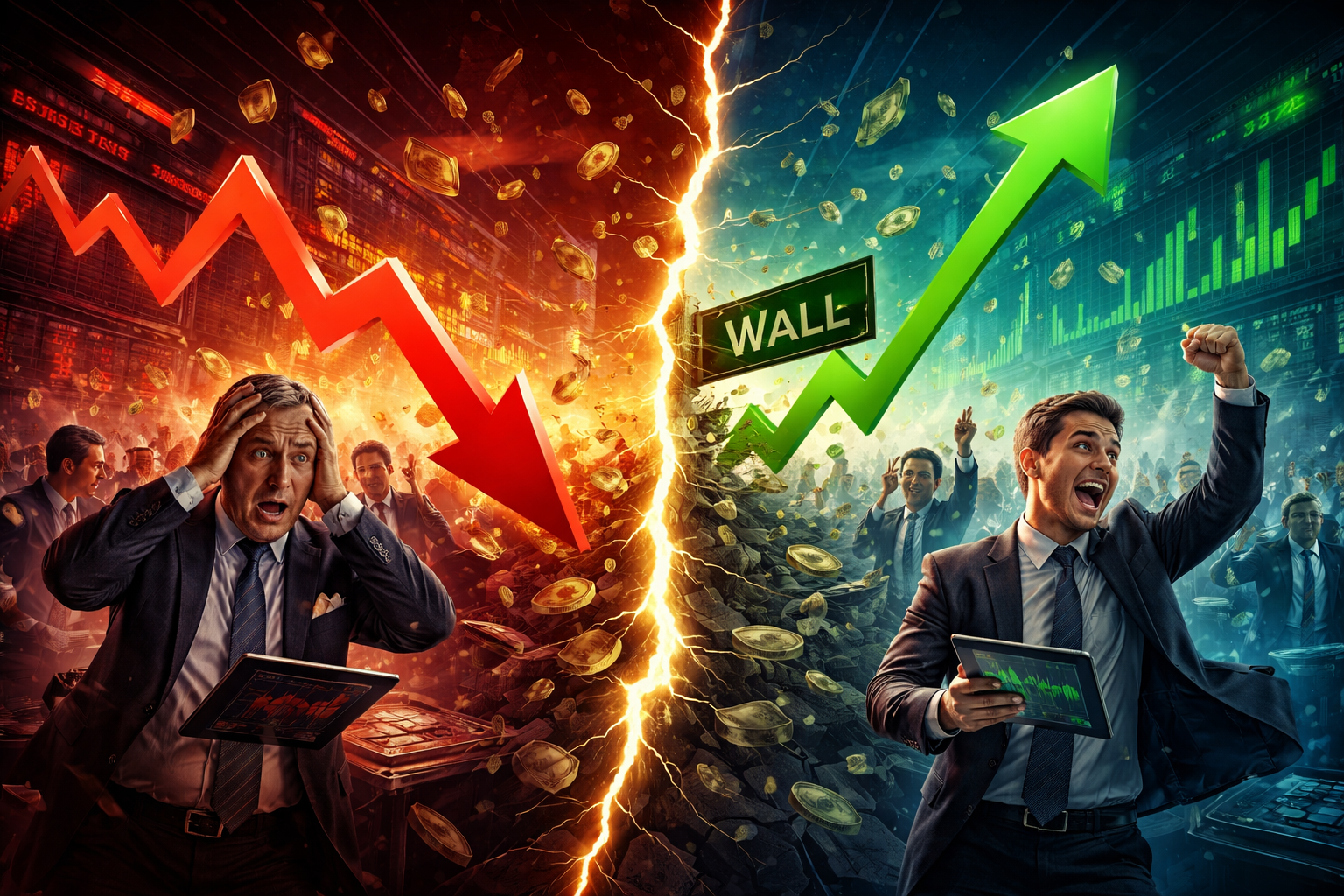
The past week on Wall Street delivered one of the most dramatic and psychologically challenging periods for investors in recent memory. Markets were rattled by sudden reversals, violent price swings, and a growing sense that the rules many traders had relied on were no longer working the same way. While headline indexes showed mixed results, the real story unfolded beneath the surface, where a sharp divide emerged between speculative momentum assets and more traditional value and defensive stocks. This divergence not only shook confidence but also forced investors to reassess how risk, fundamentals, and narrative driven trades are interacting in the current environment.
Momentum Trades Lose Their Grip
One of the clearest developments during the week was the sudden loss of control in momentum driven stocks. These are the assets that rise quickly because traders expect them to keep rising, not necessarily because their current profits justify the price. When confidence is high, this works beautifully. But when fear enters the picture, momentum becomes a liability rather than a strength.
Several popular high beta stocks and funds suffered sharp declines, some experiencing their worst single day drops in years. Technology and software names that had led the market higher suddenly became the epicenter of selling. Investors who had relied on trend following strategies were forced to unwind positions, which only added fuel to the decline. Once prices started falling, automated trading systems and risk controls accelerated the move, creating a cascading effect.
The behavior of alternative assets reflected the same psychology. Bitcoin, which thrives on speculation and confidence, saw large swings as traders took profits and reduced risk. Silver, another favorite of retail traders, also experienced dramatic volatility after a strong run. These moves were not driven by sudden changes in supply and demand fundamentals but by shifts in sentiment and positioning. When belief fades, price can fall much faster than it rose.
The software sector was especially vulnerable because it had been priced for perfection. Investors expected rapid earnings growth, smooth adoption of new technologies, and continuous innovation without major disruptions. When doubts emerged about spending, competition, and the real pace of profit generation, the sector lost its footing. What looked unstoppable just days earlier suddenly felt fragile.
Value And Stability Step Back Into The Spotlight
While momentum trades were unraveling, another part of the market was quietly strengthening. Traditional value oriented and defensive sectors began to outperform. Large, established companies with steady earnings and reliable business models attracted renewed interest. Investors who had grown uncomfortable with extreme volatility started looking for safety, predictability, and cash flow.
The Dow Jones Industrial Average, which is weighted toward mature, industrial, and consumer focused companies, reached new highs even as other indexes struggled. This was symbolic. It showed that the market was not collapsing, but it was changing character. Money was not leaving equities entirely. It was moving from stories about the future into businesses rooted in the present.
Consumer staples, industrials, and materials stocks led the way. These sectors benefit when investors care more about resilience than rapid growth. People still buy food, household goods, and basic services regardless of economic uncertainty. Factories still need equipment. Infrastructure still requires materials. These fundamentals became attractive again when risk appetite declined.
This shift suggests that many investors are rediscovering the importance of balance. Instead of betting everything on innovation and disruption, they are rebuilding exposure to companies that can perform in almost any environment. It is not that growth is dead, but that blind faith in growth has been questioned.
What Sparked The Volatility?
Unlike some historic crashes or rallies, this week’s turmoil was not triggered by one dramatic event. Instead, it came from a buildup of smaller developments that together undermined confidence. A series of corporate announcements, changes in outlooks, and concerns about spending created a background of uncertainty.
One major theme was anxiety around artificial intelligence. While AI has been one of the biggest drivers of optimism in recent years, it is also becoming a source of unease. Investors began to worry that companies might be spending too much too fast without guaranteed returns. Heavy investment in new technology sounds exciting, but it also raises questions about profitability and discipline.
At the same time, some companies delivered guidance that disappointed markets. When firms that had been seen as leaders suggested slower growth or higher costs, it challenged the idea that everything was moving in the right direction. The combination of rising expenses and uncertain payoff timelines made investors more cautious.
Macroeconomic concerns also played a role. There were renewed worries about the labor market, interest rates, and geopolitical tensions. Even when these factors do not change dramatically, they shape mood and expectations. Markets often move not on facts alone but on how people feel about the future.
Finally, technical factors amplified everything. As prices started to fall in popular stocks, stop losses were triggered. Funds reduced exposure. Algorithms followed trends. What began as a reevaluation of risk turned into a fast moving wave of selling.
The Psychology Behind The Split
At its core, this week was about psychology. Markets are built on beliefs. When people believe growth is unstoppable, they buy aggressively. When they believe risk is rising, they retreat. The shift between these states can happen quickly and violently.
Many traders had grown comfortable with volatility only going one way up. This week reminded them that markets are two sided. Fear returned in a tangible way. Suddenly, questions that had been ignored became urgent. What if earnings don’t grow as fast as expected? What if competition intensifies? What if spending is wasted?
On the other side, long term investors saw opportunity. When high profile stocks fell sharply, they did not panic. Instead, they looked for businesses that were trading at reasonable prices relative to their cash flow and stability. This difference in mindset created two parallel markets: one dominated by short term reactions and another driven by long term logic.
This split does not mean one side is right and the other is wrong. It means the market is in a transitional phase. Narratives are shifting. Old assumptions are being tested. And investors are being forced to choose between excitement and security.
What Does It Means For Traders And Investors?
For traders, the message is clear. Volatility is back in a meaningful way. Strategies that depend on smooth trends and rising prices may no longer work without adjustment. Risk management matters more than ever. Position sizing, diversification, and discipline can mean the difference between survival and failure.
For investors, the lesson is about balance. Relying too heavily on any one theme, whether it is technology, AI, or commodities, increases vulnerability when sentiment changes. A portfolio that blends growth with stability is better equipped to handle sudden shifts.
The week also highlighted that record highs do not always mean everything is healthy. An index can rise while many stocks fall. Headlines can look positive while internal market dynamics weaken. Understanding what is happening beneath the surface is more important than watching just one number.
Looking Ahead
As markets move forward, attention will remain focused on earnings, economic data, and central bank signals. But perhaps the most important factor will be confidence. Not blind confidence, but realistic confidence grounded in fundamentals rather than fantasy.
The wild week on Wall Street did more than shake prices. It shook assumptions. It reminded investors that markets are living systems shaped by emotion, logic, fear, and hope. And it revealed that we are no longer in a single story market. We are in a divided one, where speculation and stability compete for dominance.
Conclusion
Wall Street’s wild week was not just another episode of short-term volatility; it was a clear signal that the market is entering a new phase of self-examination. The sharp split between speculative momentum trades and value-driven stability stocks revealed how deeply investor psychology has shifted. Confidence in endless growth has been tested, and in its place, caution and selectivity are returning to the center of decision-making.
This period has reminded traders and investors alike that markets are not fueled by optimism alone, but by discipline, fundamentals, and risk awareness. The days of blindly chasing trends appear less reliable than before. Instead, success will likely depend on understanding where real earnings power exists and how much risk is truly worth taking.