Introduction
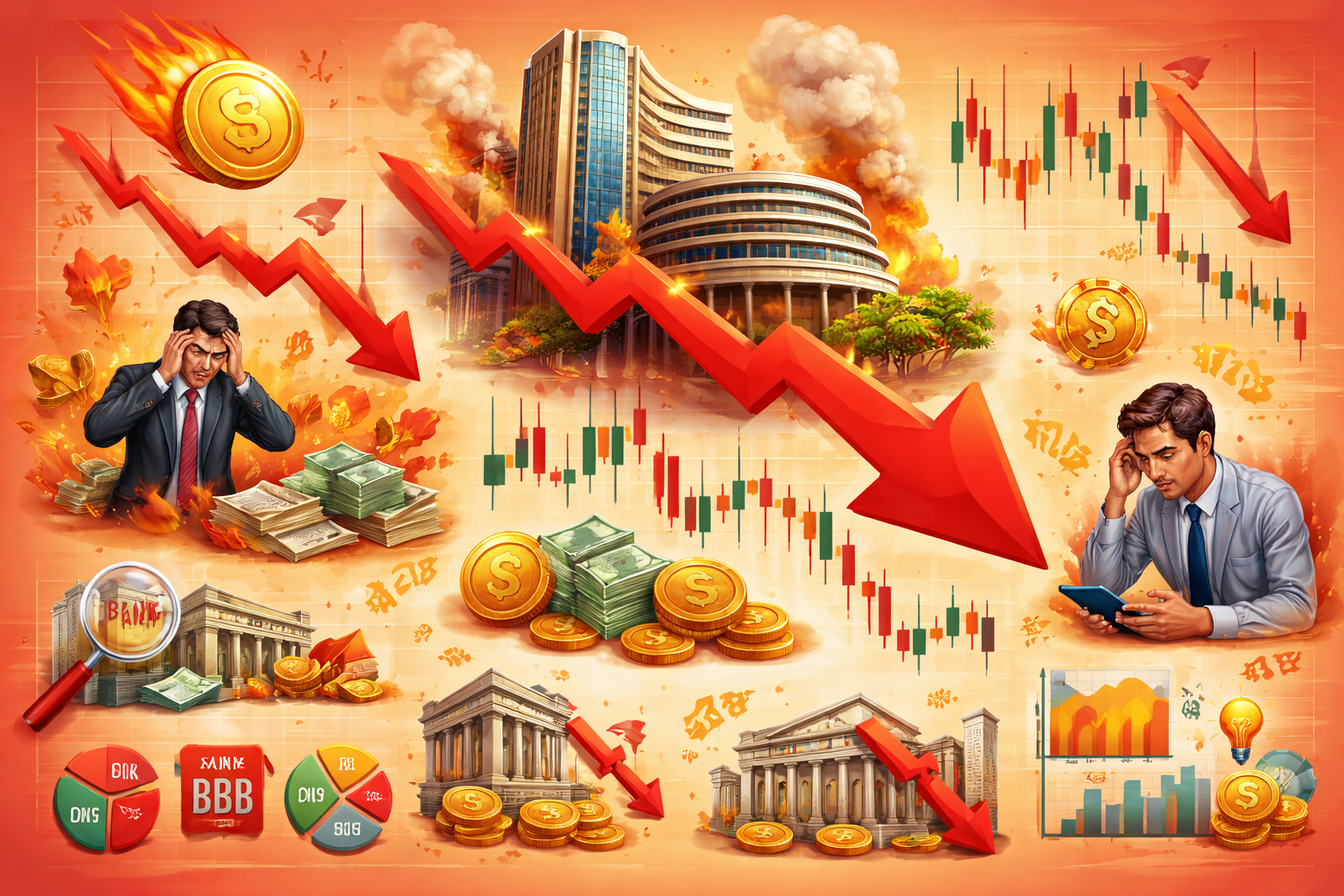
The Indian stock market experienced a sharp and unexpected decline on April 2 2026, sending strong signals of caution across the global financial landscape. Benchmark indices recorded heavy losses within a single trading session, wiping out massive investor wealth and triggering panic among both institutional and retail participants. This sudden downturn reflects the fragile nature of modern markets, where global events, economic indicators, and investor sentiment are deeply interconnected.
On this day, the Nifty 50 index fell close to 2 percent, while the BSE Sensex dropped more than 1300 points, marking one of the most significant single day corrections in recent months. The fall erased approximately Rs 11 lakh crore in market capitalization, underlining the intensity of the sell off. Such a steep decline not only impacts investor confidence but also raises concerns about the stability of the broader financial ecosystem.
Overview Of The Market Decline
The decline observed in the Indian stock market was broad based and impacted nearly all sectors. Large cap stocks led the fall, but mid cap and small cap segments were not spared, indicating widespread selling pressure. This kind of uniform decline often points to macroeconomic triggers rather than company specific issues.
The Sensex slipped sharply during intraday trading, breaching key psychological levels and intensifying bearish sentiment. Investors reacted quickly to unfolding global developments, choosing to exit positions rather than hold through uncertainty. The market’s reaction demonstrates how sensitive it has become to external shocks and news driven volatility.
Role Of Geopolitical Tensions
One of the primary reasons behind the market crash was the escalation of geopolitical tensions in the Middle East. Developments involving the United States and Iran created uncertainty regarding global stability and economic continuity. Statements suggesting a potential intensification of conflict significantly dampened investor sentiment.
Geopolitical risks tend to trigger fear driven reactions in financial markets because they are unpredictable and can disrupt trade routes, energy supplies, and diplomatic relations. In this case, the possibility of conflict escalation led investors to reduce exposure to equities and move towards safer assets.
India, despite being geographically distant from the conflict zone, is highly sensitive to such developments due to its dependence on global trade and imported energy. As a result, any instability in key regions quickly translates into volatility in domestic markets.
Surge In Crude Oil Prices
A major contributing factor to the market decline was the sharp rise in crude oil prices. Concerns over supply disruptions pushed oil prices above the 100 dollar per barrel mark, creating inflationary pressures across economies.
India, being one of the largest importers of crude oil, is particularly vulnerable to rising energy costs. Higher oil prices increase the country’s import bill, widen the current account deficit, and put pressure on the currency. These factors collectively reduce economic efficiency and corporate profitability.
Industries that rely heavily on fuel, such as aviation, logistics, and manufacturing, are directly affected by rising costs. At the same time, increased fuel prices lead to higher transportation costs, which ultimately impact consumers through inflation. This chain reaction further weakens market sentiment.
Foreign Institutional Investor Outflows
Foreign Institutional Investors played a significant role in accelerating the market decline. In times of global uncertainty, these investors tend to pull out funds from emerging markets and reallocate them to safer and more stable investment options.
The Indian market has witnessed consistent outflows from foreign investors, driven by a combination of rising global interest rates, currency fluctuations, and geopolitical risks. This withdrawal of capital reduces liquidity in the market and amplifies downward pressure on stock prices.
When FIIs sell heavily, it often triggers a domino effect, as domestic investors also begin to exit positions, fearing further declines. This creates a cycle of selling that can lead to sharp corrections within a short period.
Rising Bond Yields And Interest Rate Concerns
Another important factor contributing to the market crash was the rise in bond yields. Increasing yields indicate higher borrowing costs and expectations of tighter monetary policy. This environment makes fixed income instruments more attractive compared to equities.
For companies, higher interest rates translate into increased cost of capital, which can affect expansion plans and profitability. For investors, it reduces the appeal of stocks, particularly those with high valuations or future growth expectations.
The fear of prolonged high interest rates also impacts sectors such as real estate and banking, where borrowing plays a crucial role. As a result, these sectors often lead market declines during such periods.
Global Market Weakness
The Indian stock market decline was part of a broader global trend. Markets across Asia, Europe, and the United States also experienced significant weakness due to the same set of concerns.
The interconnected nature of global financial systems means that negative sentiment in one region can quickly spread to others. Investors react collectively to global risks, leading to synchronized declines across markets.
This global sell off reinforced the bearish sentiment in India, as investors took cues from international developments and adjusted their strategies accordingly.
Volatility And Rapid Market Swings
One of the defining characteristics of the current market environment is heightened volatility. Just a day before the crash, markets had shown strong upward momentum driven by optimism surrounding easing geopolitical tensions.
However, this optimism quickly turned into fear as new developments emerged. Such rapid shifts highlight the uncertainty that currently dominates financial markets. Prices are being driven not only by economic fundamentals but also by news flows and investor perception.
High volatility creates opportunities for short term traders but poses risks for long term investors who may struggle to navigate sudden market swings. It emphasizes the need for disciplined investing and careful risk management.
Sector Wise Impact
The market crash affected various sectors differently, though most experienced significant declines. Banking and financial stocks were among the hardest hit due to concerns about economic slowdown and rising interest rates.
Information technology companies also faced pressure, as global uncertainty raised questions about demand from key international markets. Consumer driven sectors experienced declines as fears of inflation and reduced spending power grew.
Energy related stocks showed relatively better resilience due to rising oil prices, while defense related companies attracted some interest amid geopolitical tensions. However, these pockets of strength were not sufficient to offset the overall market decline.
Impact On Retail Investors
Retail investors faced substantial losses during the market crash, especially those who had entered the market during recent rallies. The sudden drop in stock prices led to a decline in portfolio values, causing panic among inexperienced investors.
Many retail participants tend to react emotionally during market downturns, often selling at losses to avoid further decline. However, such actions can result in missed opportunities when markets eventually recover.
This situation highlights the importance of having a clear investment strategy, maintaining diversification, and focusing on long term goals rather than short term market movements.
Broader Economic Implications
The stock market often reflects the health of the broader economy. A sharp decline can impact business confidence, consumer sentiment, and investment activity.
Rising oil prices and geopolitical tensions can lead to inflationary pressures, prompting central banks to maintain tighter monetary policies. This can slow down economic growth and affect corporate earnings.
Additionally, currency volatility and capital outflows can create further challenges for policymakers, who may need to implement measures to stabilize the economy and restore investor confidence.
Investment Outlook And Future Trends
The future direction of the market remains uncertain and will largely depend on global developments. Key factors to watch include geopolitical stability, oil price movements, and central bank policies.
If tensions ease and energy prices stabilize, markets could recover relatively quickly. However, prolonged uncertainty may lead to continued volatility and cautious investor behavior.
For long term investors, market corrections often present opportunities to invest in fundamentally strong companies at attractive valuations. A disciplined and patient approach can help navigate such challenging periods.
Conclusion
The Indian stock market crash on April 2 2026 highlights the complex interplay between global events and domestic financial markets. Driven by geopolitical tensions, rising oil prices, foreign investor outflows, and macroeconomic concerns, the decline underscores the vulnerabilities of an interconnected global economy.
While short term volatility is likely to persist, the long term outlook will depend on how global and domestic factors evolve. Investors must remain cautious, informed, and focused on fundamentals to successfully navigate the uncertainties of the market.